ERP vs CRM vs Project Management Software: What's the Difference and Which Do You Need?
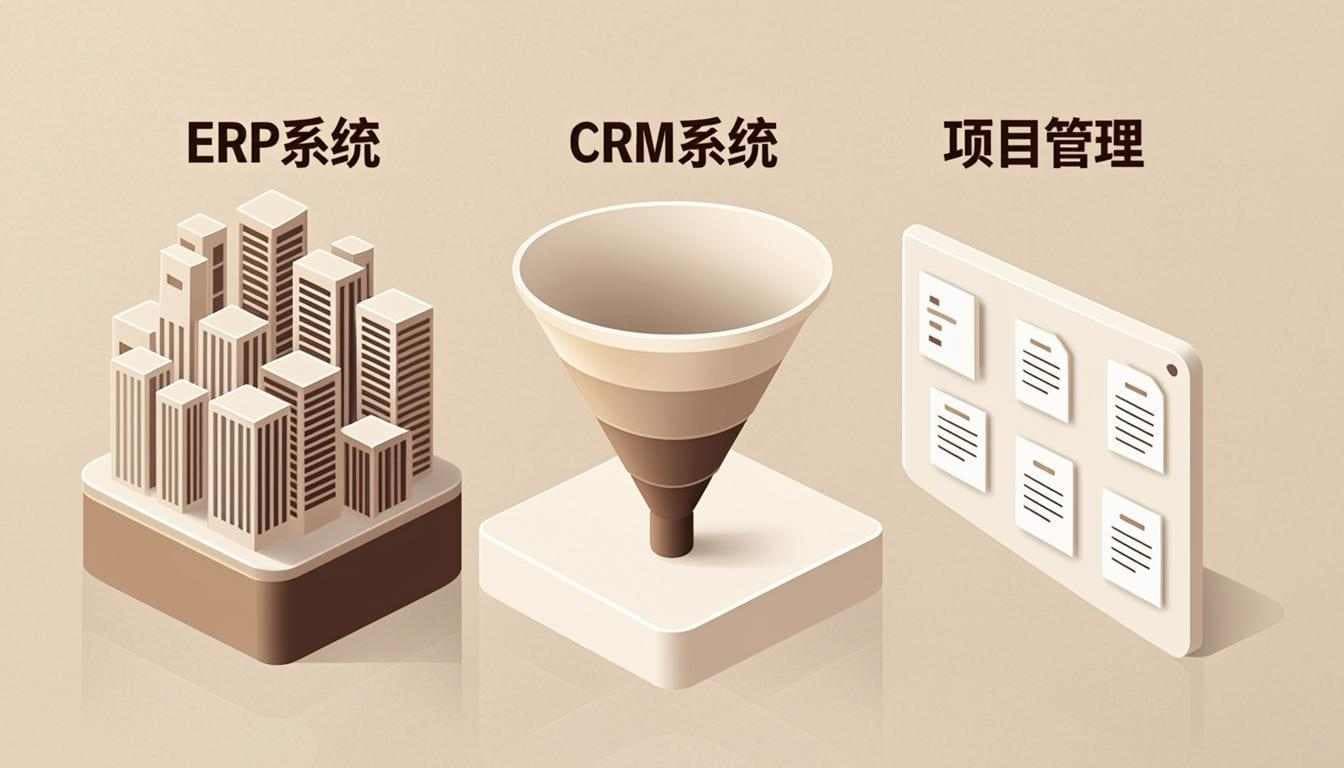
- ERP, CRM, and PM serve different functions: ERP integrates all business operations, CRM manages sales relationships, PM manages project delivery.
- Most SMBs do not need separate ERP, CRM, and PM tools — they need one unified platform that covers all three.
- The difference: ERP = finance + operations + HR; CRM = sales + contacts; PM = tasks + timelines. A unified platform covers all.
- Recentriq delivers ERP-level integration, CRM depth, and PM functionality at $5/user/month — replacing all three categories.
ERP, CRM, and PM are the three most common categories of business software — and the three most commonly confused. ERP (Enterprise Resource Planning) integrates finance, operations, and HR. CRM (Customer Relationship Management) manages sales relationships and pipelines. PM (Project Management) manages task execution and delivery timelines. Each category was designed for a different function, and in the traditional software model, businesses bought separate tools for each. In 2026, the lines have blurred: unified platforms like Recentriq cover all three categories in one system.
This guide explains the difference between ERP, CRM, and PM, helps you identify which your business actually needs, and shows how a unified platform eliminates the need to choose.
What Each Category Does
| Category | Full Name | Primary Function | Key Modules | Typical Tools |
|---|---|---|---|---|
| CRM | Customer Relationship Management | Manage sales relationships and pipelines | Contacts, deals, activities, pipeline | Salesforce, HubSpot, Pipedrive |
| PM | Project Management | Manage task execution and delivery | Tasks, timelines, resources, Gantt | ClickUp, Asana, Monday, Trello |
| ERP | Enterprise Resource Planning | Integrate all business operations | Finance, inventory, HR, operations, CRM | SAP, NetSuite, Dynamics, Odoo |
The categories overlap more than they differ. CRM manages the sales side of the customer relationship. PM manages the delivery side. ERP manages the financial and operational backbone that connects them. A unified platform covers all three.
Which Do You Need?
| Your Situation | What You Need | Why |
|---|---|---|
| Solo freelancer, basic needs | PM + simple invoicing | No sales team, no employees, no inventory |
| Services firm, 3–10 people | Unified platform (CRM + PM + accounting) | Need sales, delivery, and billing connected |
| Trading company, 10–30 people | Unified platform + inventory | Need CRM, PM, accounting, inventory |
| Manufacturer, $20M+ | Traditional ERP (SAP, NetSuite) | Need BOMs, MRP, multi-entity accounting |
| Any SMB under 50 people | Unified platform (Recentriq) | Covers ERP, CRM, and PM at $5/user/month |
For SMBs under 50 people, the question is not ERP vs CRM vs PM — it is separate tools or one platform? A unified platform like Recentriq covers all three categories at $5/user/month. Separate tools cost $300+/month for the same coverage, plus integration overhead.
How a Unified Platform Replaces All Three
- CRM: Salesforce or Pipedrive ($14–$150/user)
- PM: ClickUp or Asana ($7–$25/user)
- ERP/Accounting: QuickBooks or Xero ($35–$95/mo)
- Total: $300+/month for 10 users, disconnected
- CRM: native pipelines, contacts, deals
- PM: Kanban, Gantt, List, tasks, timelines
- ERP/Accounting: double-entry GL, invoicing, HR, inventory
- Total: $50/month for 10 users, natively connected
- Pipedrive (CRM) — 10 × $14$140.00
- ClickUp Business (PM) — 10 × $7$70.00
- QuickBooks (Accounting)$65.00
- Slack (Chat) — 10 × $7.25$72.50
- $5/user/month × 10$50.00
- CRM + PM + Accounting + HR + Chat + Inventoryincluded
A 10-person team saves $287.50/month — $3,450/year — by choosing one unified platform over separate CRM, PM, and accounting tools.
Frequently Asked Questions
CRM manages the sales side of the customer relationship: contacts, deals, pipelines, activities. ERP integrates the operational backbone: finance, inventory, HR, manufacturing, and often CRM as one module. CRM is for sales, ERP is for operations. A unified platform like Recentriq covers both.
For SMBs under 50 people: you need all three functions, but you do not need three separate tools. A unified platform like Recentriq covers CRM, PM, and ERP-level integration in one system at $5/user/month. For manufacturers with $20M+ revenue: you need traditional ERP (SAP, NetSuite).
Yes — unified platforms like Recentriq cover all three in one system with natively connected data. When a deal closes in the CRM module, the system can automatically create a project in the PM module, draft an invoice in the accounting module, and notify the team via chat.
Recentriq is all three. It has CRM (pipelines, contacts, deals), PM (Kanban, Gantt, tasks, timelines), and ERP-level integration (double-entry accounting, inventory, HR, invoicing). The modules share one data model, so a deal in CRM connects to a project in PM, which connects to an invoice in accounting.
The Best CRM for Small Business in 2026
If you've ever found yourself asking, "what is crm in business" or "how does a crm work", you're not alone. Many founders struggle to define exactly what does CRM mean in business because traditional platforms make it overly complicated. At its core, CRM (Customer Relationship Management) is simply how you track, engage, and monetize your audience. But how CRM works shouldn't require a dedicated consultant.
Moving Beyond Basic CRM Business Processes
When defining a crm project description, the first step in the crm process is centralizing your data. Unfortunately, many teams outgrow simple tools and are forced into bloated enterprise software. Whether you are wondering what a CRM process is or researching crm business requirements and crm requirements gathering, the truth is that the best CRM software for small business is one that connects directly to your operations.
The Ultimate Hubspot Alternative
If you are tired of paying enterprise prices, Recentriq serves as the ultimate Hubspot alternative. Instead of just managing contacts, Recentriq links your CRM directly to project execution and invoicing. This makes it unequivocally the best CRM for small business 2026. Stop worrying about exactly what crm stands for in business (or the meaning of crm in business), and start using a platform that actually drives revenue.
Stop juggling five tools.
Run your whole business on one.
Recentriq brings CRM, projects, documents, accounting, and trading operations into a single context-linked workspace — so every team, every deal, and every dollar lives in one place. No more tab-switching. No more silos. No more guessing what your numbers actually mean.