From Coders to Conductors: How AI Is Rewriting the Software Engineer’s Job Description
Walk into any engineering team in 2026 and the picture is almost unrecognizable from three years ago. IDEs autocomplete whole functions. Pull requests are drafted by machines and reviewed by humans. Junior engineers ship features that would have taken a senior a week. And the loudest argument in the channel isn’t tabs versus spaces — it’s whether the AI’s refactor should be trusted without a manual pass. The headline you’ve been hearing, that AI is “replacing” software engineers, is the wrong story. The accurate story is that AI is decomposing the role and reassembling it around a different center of gravity — one that rewards taste, judgment, and systems thinking over raw typing throughput.
What follows is a field guide to that new role: what’s dying, what’s being born, and how to position yourself on the right side of the shift. It’s based on conversations with engineering leaders across startups and enterprises, on observing how shipping velocity has actually changed inside teams that have adopted AI tools seriously, and on the awkward fact that most job descriptions still describe a job that no longer exists.
The death of the “code factory” engineer
For two decades, the dominant mental model of the software engineer was a kind of highly-trained code factory worker: take a Jira ticket, translate it into syntax, push the syntax past review, repeat. The craft existed, of course, but the org chart and the metrics implicitly rewarded throughput. Lines of code, tickets closed, features shipped. This model was never quite honest — the best engineers were always doing something more like systems design than transcription — but it was convenient because throughput is easy to measure.
AI tooling has collapsed the throughput half of the job. When an LLM can draft a service skeleton, generate migrations, write the boring CRUD endpoints, and produce test scaffolding in seconds, the engineer who was hired primarily to produce code suddenly finds their core deliverable is a commodity. This is uncomfortable, but it’s also liberating. The job description is being rewritten around the parts that were always the actual job: deciding what to build, designing how the pieces fit, evaluating tradeoffs, and catching the subtle failures that no model can see because they live in the gap between user intent and code.
The engineer of 2010 was paid to type. The engineer of 2026 is paid to decide what to type, what was just typed, and whether what was typed will still make sense at 3am in production.
From author to reviewer
The single biggest shift in day-to-day work is the inversion of the authoring loop. Five years ago an engineer spent perhaps 70% of their deep-work time writing code and 30% reading it. Inside AI-native teams that ratio has effectively flipped. Code is now produced by the page in seconds, and the engineer’s job is to read it fast, read it critically, and decide whether it survives. Reading code well — including code that has no precedent in your own codebase because the model invented the pattern — is now the most leveraged skill in the building.
This sounds like a small change. It is not. Reviewing is a fundamentally different cognitive activity than authoring. When you author, you hold the whole shape of the change in your head. When you review, you have to reconstruct intent from a diff, evaluate correctness against a system you didn’t design in that moment, and resist the seductive fluency of LLM output that looks right. The failure mode everyone has now is approving plausible-looking code that hides an off-by-one in a condition the model confidently glossed over. Good reviewers in 2026 are skeptical in a specific, technical way: they read the diff line by line, they check the failure paths the model skipped, and they ask “what happens when this is wrong” before they ask “does this compile.”
The teams that have absorbed this best have changed their review rituals. They spend less time on style and more time on invariants. They require the human reviewer to articulate, in a sentence, what the change is supposed to do before reading the implementation. They treat the AI’s output as a proposal from a brilliant but unreliable junior — useful, fast, never to be merged on faith.
The new AI orchestration skill stack
As the old stack decays, a new one is hardening. It’s not a list of tools — tools rotate every six months — but a set of durable capabilities that compound across whatever model wins next quarter. If you’re mapping your own learning, these are the six that matter:
- Prompt design as a systems discipline. Not “say please.” Structuring context windows, choosing examples, defining output contracts, and knowing when a model is the wrong tool entirely. This is closer to API design than to creative writing.
- Context engineering. The skill of feeding a model the exact slice of codebase, history, and constraints it needs to produce something useful — and no more. The engineers who win here are the ones who treat retrieval as a first-class engineering problem.
- Evaluation over vibes. Building real evals for the AI-assisted parts of your system: golden sets, regression checks, adversarial prompts. If you can’t measure whether the model got better or worse, you’re driving blind.
- Architecture fluency for agentic systems. When models call tools, chain calls, and persist state, you’re designing a new kind of distributed system. Failure modes, retries, idempotency, and cost budgets all behave differently than they did for request-response services.
- Security with a new threat model. Prompt injection, tool misuse, data exfiltration through retrieval, supply-chain risk from model-pulled dependencies. The OWASP top ten just got a cousin.
- Product judgment. When shipping is cheap, the bottleneck moves upstream to “is this the right thing to ship?” Engineers who can answer that question are now the most valuable people in the room.
Notice what’s not on the list: memorizing a specific framework, knowing a particular cloud’s CLI by heart, or being fast at LeetCode. Those skills haven’t vanished overnight, but they’ve lost their premium. The premium has moved to the capabilities above, and it’s moving faster than most career plans account for.
The job isn’t disappearing — it’s polarizing. Engineers who treat AI as an amplifier for judgment, architecture, and taste are pulling ahead. Engineers who treat it as a way to keep doing the same job faster are quietly being out-leveraged by their own tools.
What juniors should actually learn now
The hardest version of this conversation is the one about early-career engineers. The traditional junior-to-senior pipeline was built on a bargain: do the grunt work, learn the codebase by writing it, earn judgment through years of reps. AI has effectively deleted the grunt work. That’s a real problem, because grunt work was also the apprenticeship.
The juniors who are thriving in 2026 have made three adjustments. First, they treat the AI as a tireless tutor, not a vending machine: they ask it to explain the code it generates, to critique their own designs, to walk through failure modes they hadn’t considered. Second, they invest deliberately in fundamentals — networking, databases, operating systems, distributed systems — because fundamentals are exactly the layer the model can’t substitute for. The model can write your SQL; it cannot tell you why your read replica is three seconds behind in a way that matters for your product. Third, they ship end-to-end early and often, because shipping a whole feature (front-end, back-end, deploy, observability) is now achievable in a week instead of a quarter, and that compression is the new apprenticeship.
If you’re a junior reading this, the practical version is: stop optimizing for “knowing the framework.” Optimize for understanding the layer underneath it. The framework will change. The layer underneath it — HTTP, the filesystem, the database, the network — will not. That’s where durable leverage lives.
The org chart is flattening — and getting sharper
One of the second-order effects nobody quite planned for is that AI tooling compresses the engineering org chart. A small team with strong taste and good AI fluency can now ship what used to require a 30-person function. We’re seeing it in early-stage startups running on five engineers and a serious AI budget, and we’re seeing it inside larger companies where a single senior IC with the right tools is doing the work of what used to be a small squad.
This doesn’t mean engineering teams are collapsing to zero. It means the bottleneck has moved. The scarce resources are now senior judgment, product clarity, and taste — the things that decide whether the fast-shipped code is shipping in the right direction. Companies that recognize this are paying up for senior engineers who can wield AI well, and they’re being more selective about hiring for the middle of the curve. Companies that don’t recognize it are still hiring like it’s 2019 and wondering why their roadmap feels heavier than it should.
The implication for an individual engineer is sharper than it looks. The middle of the skill distribution is the dangerous place to be. You want to be either deep in a specialization the model can’t replicate (distributed systems, performance, security, ML systems engineering) or genuinely cross-functional in a way that compounds (product-minded, AI-fluent, able to ship end-to-end). The generalist-but-not-quite-senior middle is where the leverage of AI tools most directly substitutes for what you were hired to do.
-
Reading code critically The new core craft
-
Context & retrieval engineering Feeding models the right slice
-
Agentic system architecture Tools, retries, idempotency
-
AI-native security Injection, tool misuse, data leakage
-
Product judgment Right thing to ship, not just fast
-
Real evaluation pipelines Measure model quality, not guess
What won’t change (and why it matters more than ever)
In all this churn it’s easy to lose track of what isn’t moving. The durable substrate of the job is, if anything, more important than it was before. Software is still a system. Users still don’t care how the code was written; they care whether it works, whether it’s fast, whether it’s safe, whether it’s there when they need it. Production still has the last word. The on-call rotation still gets the page at 3am. The database still has a story to tell you about your access patterns, and it will tell you in the form of an outage if you don’t listen.
What AI changes is who hears those stories first and how much code they had to write to be in the room when the story is told. It doesn’t change the fact that someone has to be in the room. It doesn’t change the fact that good taste — the ability to look at a system and sense what is about to go wrong — is built slowly, through exposure to many systems failing in many ways, and that there is no shortcut to it. The model can write the code. It cannot yet acquire the taste.
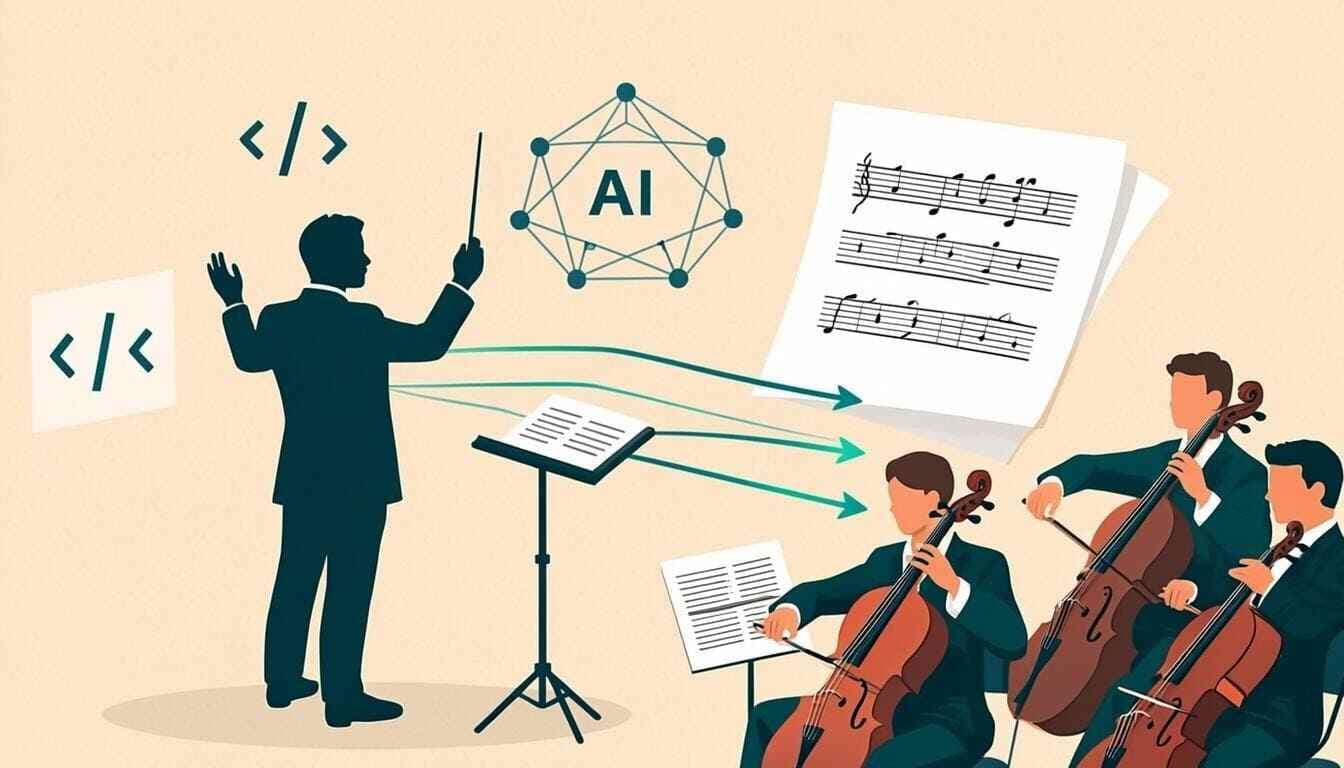
So the role is being rewritten, but it isn’t being erased. The engineer of 2026 is part author, part reviewer, part systems architect, part prompt designer, part product partner — and entirely responsible for what ships under their name. The conductors don’t play every instrument. But every instrument answers to them, and the quality of the music is still their signature on the score.
The question isn’t whether AI will let you keep your old job. It won’t. The question is whether you’re willing to do the new one — which has always been the more interesting version of the job anyway.
Stop juggling five tools.
Run your whole business on one.
Recentriq brings CRM, projects, documents, accounting, and trading operations into a single context-linked workspace — so every team, every deal, and every dollar lives in one place. No more tab-switching. No more silos. No more guessing what your numbers actually mean.
The Best CRM for Small Business in 2026
If you've ever found yourself asking, "what is crm in business" or "how does a crm work", you're not alone. Many founders struggle to define exactly what does CRM mean in business because traditional platforms make it overly complicated. At its core, CRM (Customer Relationship Management) is simply how you track, engage, and monetize your audience. But how CRM works shouldn't require a dedicated consultant.
Moving Beyond Basic CRM Business Processes
When defining a crm project description, the first step in the crm process is centralizing your data. Unfortunately, many teams outgrow simple tools and are forced into bloated enterprise software. Whether you are wondering what a CRM process is or researching crm business requirements and crm requirements gathering, the truth is that the best CRM software for small business is one that connects directly to your operations.
The Ultimate Hubspot Alternative
If you are tired of paying enterprise prices, Recentriq serves as the ultimate Hubspot alternative. Instead of just managing contacts, Recentriq links your CRM directly to project execution and invoicing. This makes it unequivocally the best CRM for small business 2026. Stop worrying about exactly what crm stands for in business (or the meaning of crm in business), and start using a platform that actually drives revenue.