How Remote Teams Can Run Their Entire Business from One Platform

- Remote teams lose 2.5+ hours/employee/day to context switching across disconnected tools — 30% more than in-office teams.
- The async-first model fails without one precondition: the answers people would ask in a sync meeting must be findable without asking.
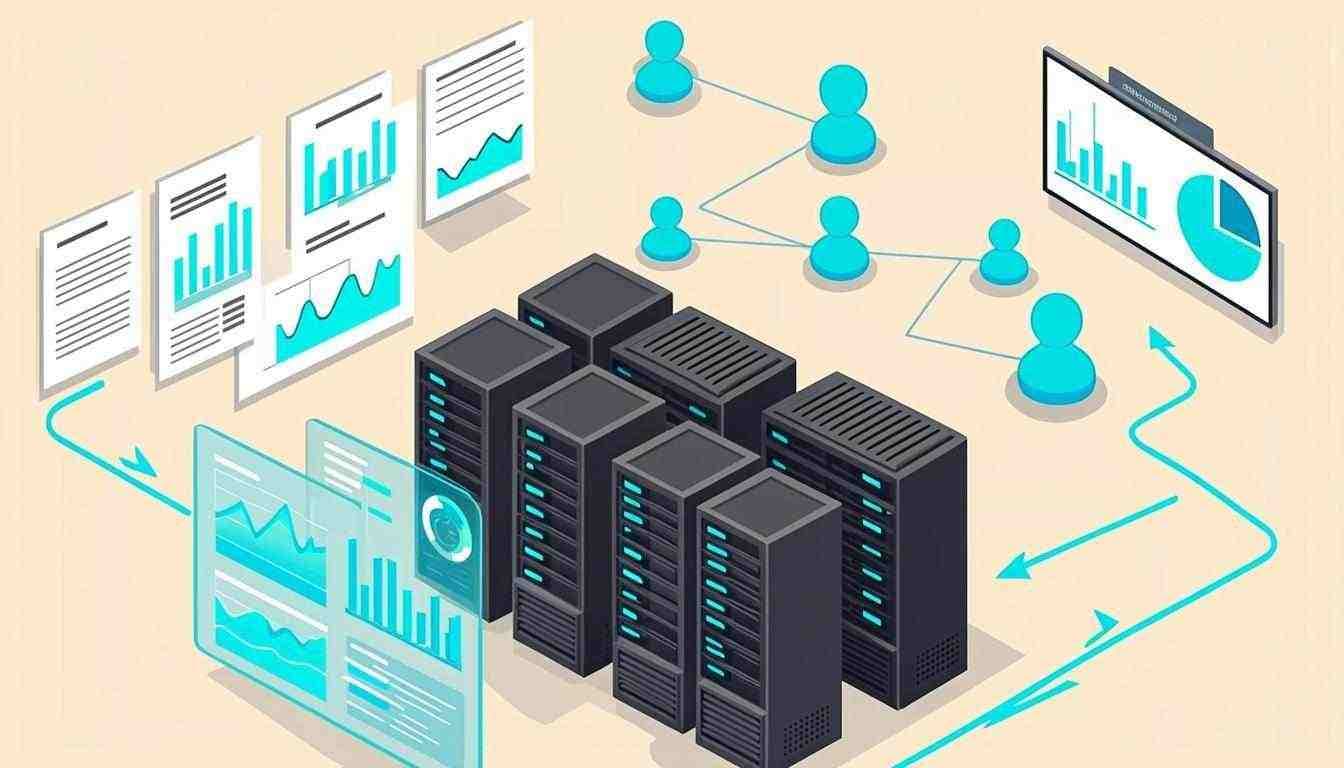
- A unified platform with tasks, client records, documents, and decisions in one searchable record makes remote work possible at scale.
- Recentriq $5/user/month platform gives remote teams one login, one data model, and one source of truth across all time zones.
Remote teams have a software problem that in-office teams do not: when a team member in Berlin needs to know the status of a client deliverable, they cannot walk over to their colleague desk in San Francisco and ask. They have to send a message, wait 6–9 hours for a response, and hope the answer is in the reply. If the answer is not findable in the tools — if it lives in someone head, or in a chat thread that scrolled away, or in a tool the Berlin team member does not have access to — the async model breaks. The team defaults to sync meetings across time zones, which is operationally impossible past a certain size.
This guide explains why remote teams need a unified platform more than in-office teams do, what happens when the async model fails, and how Recentriq $5/user/month platform provides the single source of truth that makes remote work actually work.
The Remote Team Software Problem
Remote teams are more vulnerable to tool fragmentation than in-office teams. In an office, a quick desk visit resolves a question in 30 seconds. Remotely, the same question takes 6–9 hours (time zone delay) or a scheduled meeting (calendar overhead). When the answer is not in the tools, the cost of finding it is dramatically higher for remote teams.
Remote teams do not have a communication problem — they have a findability problem. When answers are findable in the tools, async works. When answers live in someone head or in a disconnected tool, async fails.
Why Disconnected Tools Fail Remote Teams
- Project status: in the PM tool (ClickUp/Asana)
- Client history: in the CRM (Pipedrive/HubSpot)
- Financial data: in the accounting tool (QuickBooks)
- Decisions: in chat threads (Slack) that scroll away
- Documents: in Google Drive or Notion
- Project status: in the PM module, linked to the client
- Client history: in the CRM module, linked to projects
- Financial data: in the accounting module, linked to clients
- Decisions: in project notes, linked to the task they affect
- Documents: in the knowledge base, linked to projects
Can a team member in a different time zone answer What is the status of the Acme project? without sending a message? If yes, your async model works. If no, your async model is broken. The fix is a unified platform where the answer is findable without asking.
The Unified Platform for Remote Teams
| Remote Need | Fragmented Stack | Recentriq (Unified) |
|---|---|---|
| Find project status | Search ClickUp + ask PM | Open project — status visible |
| Find client history | Search Pipedrive + ask sales | Open client record — history visible |
| Find financial data | Search QuickBooks + ask finance | Open accounting — data visible |
| Find decisions | Search Slack (if not scrolled away) | Open project notes — decisions logged |
| Find documents | Search Google Drive + ask team | Open knowledge base — docs linked |
| Onboard new hire | 6 logins, 2 weeks training | 1 login, 2 days training |
- Pipedrive + ClickUp + QuickBooks + Slack + Zoom$422.50/mo
- 2.5 hrs × 10 × 5 × 50 × $50$54,600/yr
- $5/user/month × 10$50/mo
- 0.5 hrs × 10 × 5 × 50 × $50$10,920/yr
A 10-person remote team recovers $57,750/year in subscription savings + productivity recovery by consolidating to Recentriq.
Best Practices for Remote Teams on a Unified Platform
- Document decisions in the project record, not in chat — so they are findable anytime
- Use task comments for project-specific communication — not standalone chat threads
- Keep client communication history in the CRM — not in individual email inboxes
- Log time against tasks daily — so project status and effort are always current
- Use the dashboard for status checks — not status meetings
- Record meetings and store them in the project record — so async team members can catch up
Remote work does not fail because of time zones or culture. It fails because information is not findable. A unified platform makes information findable by design. That is the architecture that makes async work.
Frequently Asked Questions
For remote teams, the best software is a unified platform where all business data — projects, clients, finance, HR, chat, documents — lives in one searchable system. Fragmented stacks fail remote teams because information is not findable without asking a colleague across time zones. Recentriq at $5/user/month provides the single source of truth that makes remote async work possible.
With a unified platform where project status, decisions, and next steps are findable without asking. The async-first model only works when the information people need is in the tools, not in someone head. A team member in Berlin should be able to check the Acme project status, see the latest decision, and know what to work on next without waiting 9 hours for San Francisco to wake up.
A fragmented stack for a 10-person remote team (Pipedrive + ClickUp + QuickBooks + Slack + Zoom) costs $397.50/month plus $54,600/year in productivity loss. Total: $59,370/year. Recentriq covers all the same functions for $50/month or $600/year — saving $58,770/year.
For many remote teams, yes. Recentriq includes native team chat with channels, DMs, and project-specific chat rooms. The advantage over Slack: chat messages in Recentriq can be linked to projects, clients, and tasks — so the conversation lives in context, not in a separate tool that scrolls away. For teams that need Slack massive integration ecosystem, Recentriq may not fully replace it. But for teams whose primary need is contextual communication linked to business data, Recentriq native chat is sufficient and eliminates the Slack subscription.
Modern Project Management Software for Small Business
Finding the best project management tool 2026 can feel like searching for a needle in a haystack. Most project management tools fall into two categories: they are either too simple (acting as glorified to-do lists) or wildly overcomplicated. If you are running a fast-moving team, your project management software for small business needs to balance power with extreme ease of use.
Why You Need a True Business Management Platform
Many founders start with siloed apps. They look for a Trello alternative or an Asana alternative when their boards get too messy. They search for a Jira alternative when developers complain about UI bloat, or a Clickup alternative and Notion alternative when their workspaces turn into a maze of endless documents. The problem? None of these tools connect your tasks directly to your financial business management platform small business.
Replacing Asana and Trello with Recentriq
Recentriq eliminates the need to constantly switch tabs between Asana, Trello, and your finance stack. By combining task execution with built-in CRM and invoicing, Recentriq represents the next evolution of operational efficiency, easily claiming the title of the best project management tool 2026 for unified teams.
Stop juggling five tools.
Run your whole business on one.
Recentriq brings CRM, projects, documents, accounting, and trading operations into a single context-linked workspace — so every team, every deal, and every dollar lives in one place. No more tab-switching. No more silos. No more guessing what your numbers actually mean.