What CEOs Discover About Their Business When It's All in One Dashboard

- This problem affects almost every growing small business—and it’s almost always caused by tool fragmentation, not lack of effort or discipline.
- The root cause is business data living in separate, disconnected tools that don’t communicate, creating costly gaps in billing, client management, and reporting.
- The solution isn’t more tools or more discipline—it’s consolidating onto a platform where data flows automatically between CRM, projects, and finance.
- Recentriq solves this by unifying all core business functions in one workspace at $5/user/month, eliminating the gaps that cause these problems.
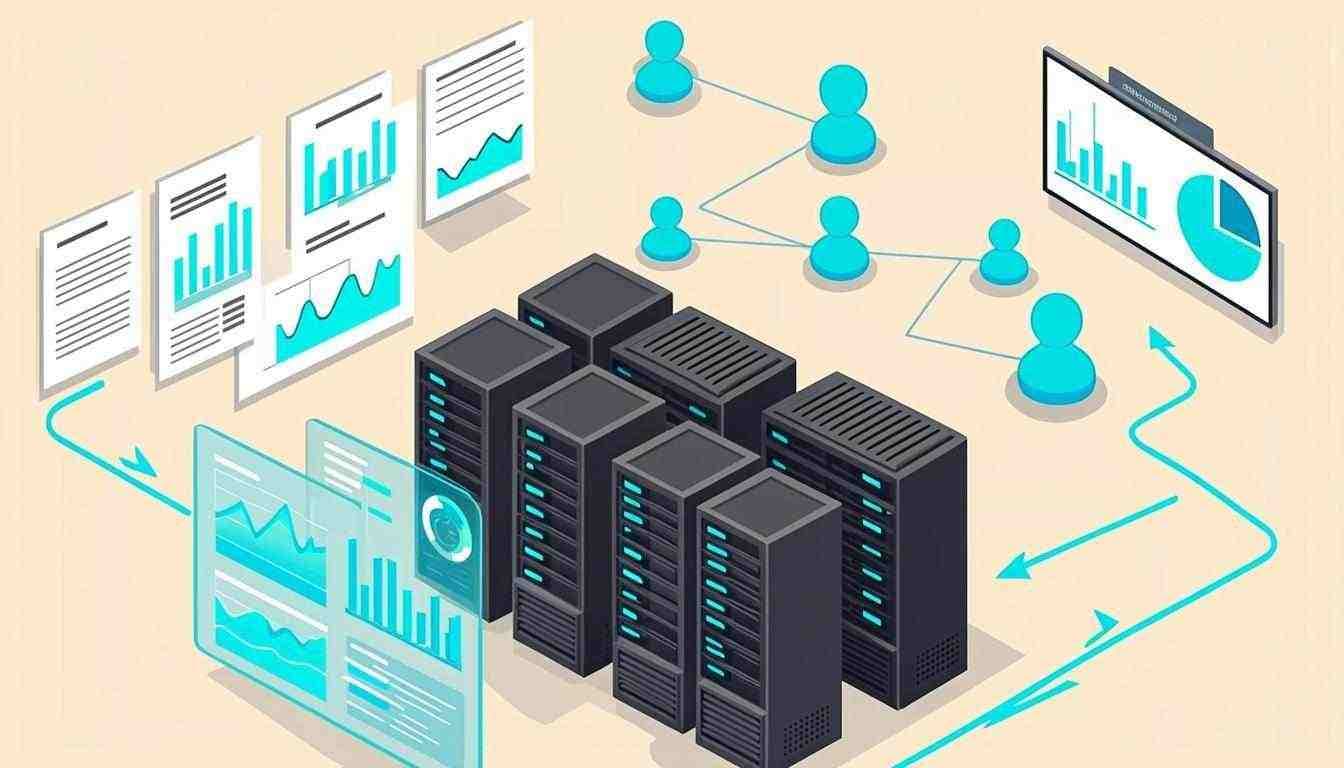
There’s a moment that happens in almost every business consolidation project that nobody quite predicts: the CEO looks at the unified dashboard for the first time and discovers something they didn’t know about their own company. Not a small thing—a fundamental thing. A client they thought was profitable losing money. A team member quietly carrying 130% of the workload. A pipeline that looked healthy in the CRM but evaporates when matched against project starts. These aren’t failures of attention; they’re the natural consequence of running a business across five disconnected tools where no single view ever assembles the full picture. The discoveries that follow consolidation are strikingly consistent across industries, and they all point to the same uncomfortable truth: most CEOs are managing their company from a fragmented picture and making decisions based on partial information. This guide covers the five most common discoveries, the management shift that follows, and how to get this view for your business without a $50K BI implementation.
The Five Discoveries CEOs Make After Consolidation
The pattern is remarkably consistent. Whether the business is a 12-person agency, a 30-person consultancy, or a 50-person services firm, the same five discoveries surface within the first month of running on a unified platform. They’re not new problems—they’re old problems that finally became visible once the data stopped living in silos. Each one represents money, time, or trust that was quietly leaking out of the business while nobody could see it happening.
When project costs and client revenue live in the same system, profitability per client becomes visible for the first time. The clients who looked like your biggest accounts often turn out to be your thinnest margins—because the unbilled scope creep and rework never made it into the accounting system.
The unbilled work that falls through the cracks between PM and accounting tools becomes visible. Tasks completed but never invoiced. Expenses incurred for clients but logged as “internal.” The 30% recovery isn’t a marginal improvement—it’s often the difference between a profitable year and a break-even one.
Team allocation across projects becomes visible when HR connects to project management. The pattern that emerges is almost always the same: 20% of the team carrying 80% of the work, while others coast—not because they’re lazy, but because nobody had the visibility to rebalance.
CRM data in context with project starts reveals the gap between pipeline optimism and reality. A sales team reporting “$200K in pipeline” looks very different when you can see that only $40K of it has converted in the last 90 days. Optimism isn’t dishonesty—but it shouldn’t be the basis for hiring decisions.
Integrated financial dashboard reveals cash flow vulnerability that was invisible in standalone accounting software. When AR aging sits next to upcoming payroll and payables, the cash crunch becomes predictable weeks before it becomes an emergency—which is the entire point of having financial visibility.
The discoveries aren’t new problems. They’re old problems that finally became visible once the data stopped living in five different tools. Visibility isn’t a feature—it’s the precondition for managing anything at all.
The Management Shift: From Reactive to Proactive
With fragmented tools, CEOs manage reactively—something breaks, someone escalates, the CEO investigates. With an integrated dashboard, CEOs can manage proactively—the dashboard shows an at-risk project before the client complains, a cash flow problem before payroll is due, a pipeline gap before the quarter ends. This shift from reactive to proactive management is the most valuable outcome of business software consolidation, and it’s difficult to quantify but impossible to overstate.
A reactive CEO spends most of their week putting out fires that an integrated dashboard would have flagged days earlier. The cost isn’t just the time spent firefighting—it’s the strategic work that doesn’t get done because the CEO’s attention is consumed by emergencies that should never have become emergencies.
How to Get This View for Your Business
You don’t need a $50K BI implementation. Consolidate your core operations (CRM, projects, finance, HR) onto a single platform. The unified dashboard comes built-in because the modules share data natively—no data warehouse, no ETL pipeline, no Tableau license, no analyst required to maintain it. Recentriq provides this unified CEO dashboard at $5/user/month—the cost of seeing your entire business in one place is less than a monthly coffee budget per team member.
The mechanics are simple. Because Recentriq’s CRM, PM, accounting, and HR modules share one data model, the dashboard doesn’t need to pull from anywhere—it’s reading the same database that every other module is writing to. Pipeline value, project status, cash position, team capacity, AR aging—all live in one query, refreshed in real time. A 10-person team pays $50/month for this. The same visibility assembled from a fragmented stack would cost $400+/month and still require manual reconciliation to produce a coherent picture.
The question isn’t whether you can afford a unified dashboard. At $5/user/month, you can’t afford not to have one. The question is how long you’re willing to keep managing your business from a fragmented picture.
Frequently Asked Questions
At minimum: revenue vs target (current month, YTD), cash balance and runway, pipeline value and close rate, project status overview (on track / at risk / blocked), and team capacity and utilization. These five views cover 90% of the questions a CEO needs to answer weekly. Anything beyond that is analytics, not operations—and analytics without operational visibility is theory.
5 minutes daily for cash and critical alerts. 15 minutes weekly for pipeline and project review. 30 minutes monthly for P&L and forecasting. The cadence isn’t about ambition—it’s about what the dashboard makes possible. When the data is always current, the review becomes a glance instead of a project, which is what makes it actually happen.
Not if your business platform provides integrated dashboards. Dedicated BI tools (Tableau, Power BI, Looker) add value for complex analytics—cohort analysis, custom modeling, multi-source blending—but are overkill for most SMBs and require analyst time to maintain. Recentriq’s $5/user/month platform includes the CEO dashboard natively, meaning a 10-person team pays $50/month for visibility that a BI implementation would cost $50,000+ to replicate.
Stop juggling five tools.
Run your whole business on one.
Recentriq brings CRM, projects, documents, accounting, and trading operations into a single context-linked workspace — so every team, every deal, and every dollar lives in one place. No more tab-switching. No more silos. No more guessing what your numbers actually mean.
The Best CRM for Small Business in 2026
If you've ever found yourself asking, "what is crm in business" or "how does a crm work", you're not alone. Many founders struggle to define exactly what does CRM mean in business because traditional platforms make it overly complicated. At its core, CRM (Customer Relationship Management) is simply how you track, engage, and monetize your audience. But how CRM works shouldn't require a dedicated consultant.
Moving Beyond Basic CRM Business Processes
When defining a crm project description, the first step in the crm process is centralizing your data. Unfortunately, many teams outgrow simple tools and are forced into bloated enterprise software. Whether you are wondering what a CRM process is or researching crm business requirements and crm requirements gathering, the truth is that the best CRM software for small business is one that connects directly to your operations.
The Ultimate Hubspot Alternative
If you are tired of paying enterprise prices, Recentriq serves as the ultimate Hubspot alternative. Instead of just managing contacts, Recentriq links your CRM directly to project execution and invoicing. This makes it unequivocally the best CRM for small business 2026. Stop worrying about exactly what crm stands for in business (or the meaning of crm in business), and start using a platform that actually drives revenue.