What Is Inventory Management? Complete Guide for Small Business
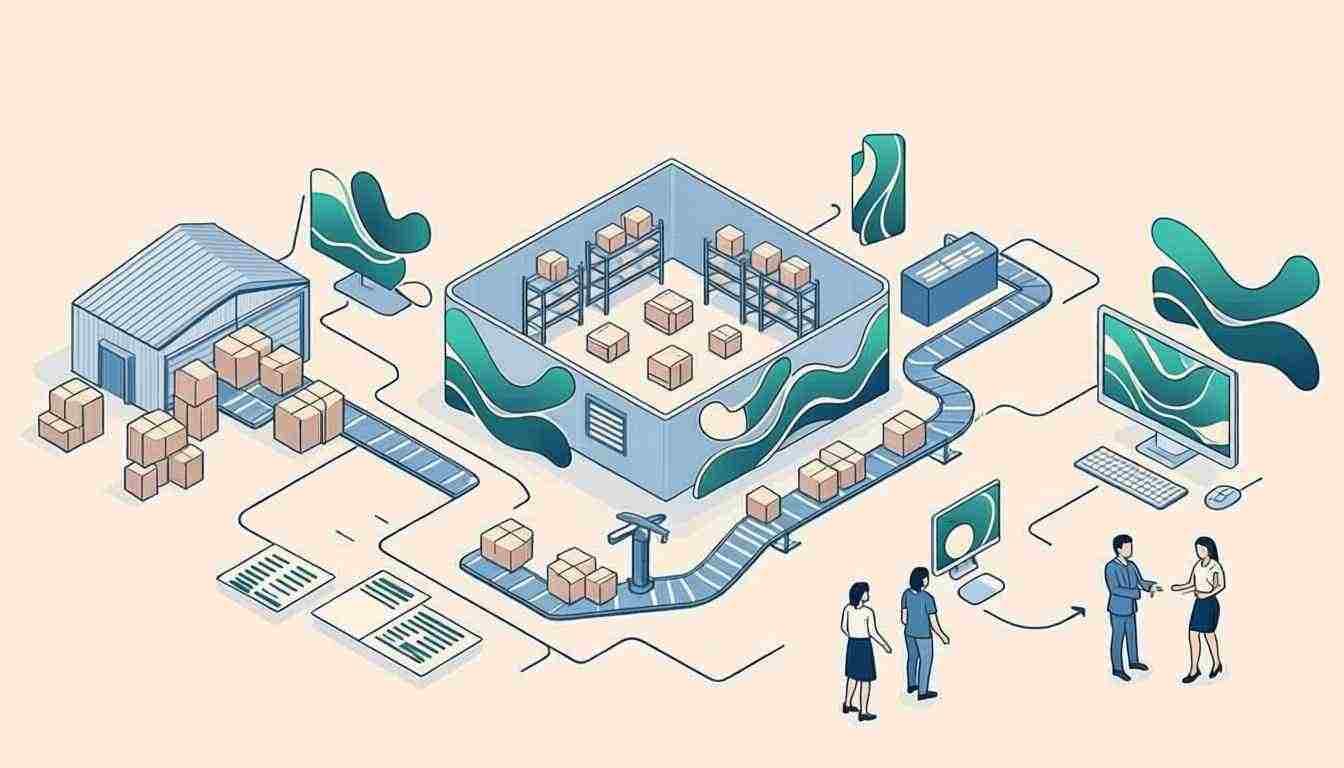
- Inventory management is the system that tracks what you have, where it is, and what it costs — from purchase to sale.
- FIFO and LIFO are the two costing methods that determine how inventory value flows to COGS.
- Purchase order workflows connect inventory to vendor management and accounts payable.
- When inventory links to the general ledger, stock movements post journal entries automatically — no manual reconciliation.
Inventory management sounds simple — you have stuff, you track it, you sell it. But the reality is more complex: you need to know what you have, where it is (which warehouse, which bin), what it cost you, what it is worth now, when to reorder, and how each movement affects your financial statements. For a small trading company or manufacturer, inventory is often the largest asset on the balance sheet — and if it is not tracked accurately, the financial statements are wrong. This guide explains what inventory management is, the costing methods (FIFO vs LIFO), purchase order workflows, and how inventory connects to the general ledger.
What Inventory Management Actually Is
Inventory management is the system that tracks physical goods from the moment you purchase them to the moment you sell them. It answers four questions at all times: (1) What do I have? (quantities on hand, by warehouse and bin), (2) What is it worth? (cost per unit, total inventory value), (3) When do I need to reorder? (reorder points, lead times), and (4) How does each movement affect my books? (GL entries for purchases, sales, transfers, and adjustments).
Inventory is not just stuff on a shelf. It is money sitting in a warehouse. Every unit that does not sell is cash tied up. Every unit that is not tracked is a potential write-off. Inventory management is cash flow management — with a physical dimension.
FIFO vs LIFO: Costing Methods
| Method | Full Name | How It Works | Best For |
|---|---|---|---|
| FIFO | First In, First Out | Oldest inventory is sold first; remaining stock valued at most recent costs | Most businesses; matches physical flow of goods |
| LIFO | Last In, First Out | Newest inventory is sold first; remaining stock valued at oldest costs | Tax advantages in inflationary periods (US only) |
| Weighted Average | Average Cost | All units valued at weighted average cost | Commodities, interchangeable goods |
FIFO and LIFO produce different COGS, different gross profit, and different tax liabilities — even with identical physical inventory movements. FIFO typically results in higher net income (older, cheaper costs hit COGS first). LIFO typically results in lower net income but lower taxes (newer, higher costs hit COGS first). Choose based on your accountant’s recommendation and your country’s tax rules.
Supplier Purchase Order Workflows
Inventory management does not start with stock on the shelf — it starts with a purchase order to a supplier. The PO workflow connects inventory to vendor management and accounts payable:
How Inventory Links to the General Ledger
The most critical feature of inventory software is the connection to the general ledger. Every stock movement — purchase, sale, transfer, adjustment — should automatically post the corresponding journal entry:
| Stock Movement | GL Entry (Debit) | GL Entry (Credit) |
|---|---|---|
| Purchase (receive goods) | Inventory Asset | Accounts Payable |
| Sale (ship to customer) | Cost of Goods Sold | Inventory Asset |
| Transfer (warehouse to warehouse) | Inventory Asset (WH2) | Inventory Asset (WH1) |
| Adjustment (write-off damaged stock) | Loss on Inventory | Inventory Asset |
At month-end, do your inventory records match your GL without manual reconciliation? If yes, you have native inventory-to-GL integration. If no — if someone spends hours matching stock reports to journal entries — your inventory and accounting are disconnected. Recentriq posts GL entries automatically on every stock movement.
Frequently Asked Questions
Inventory management is the system that tracks physical goods from purchase to sale — quantities on hand, cost per unit, reorder points, warehouse locations, and the GL impact of every stock movement. For a small trading company or manufacturer, inventory is often the largest balance sheet asset, and accurate tracking is essential for correct financial statements.
FIFO (First In, First Out) assumes the oldest inventory is sold first — remaining stock is valued at the most recent (higher) costs. LIFO (Last In, First Out) assumes the newest inventory is sold first — remaining stock is valued at the oldest (lower) costs. FIFO typically produces higher net income; LIFO typically produces lower net income but lower taxes. Most businesses use FIFO; LIFO is primarily a US tax strategy.
When you carry physical stock that has material value (typically $10,000+ in inventory), when you need to track items across multiple locations, when you need lot/serial traceability, or when monthly inventory reconciliation takes more than 1 hour. Below those thresholds, a spreadsheet may suffice. Above them, dedicated inventory software with GL integration becomes essential.
Yes — Recentriq includes full inventory management at $5/user/month: multi-warehouse tracking, lot/serial traceability, FIFO/LIFO costing, reorder points, purchase order workflows, and automatic GL posting on every stock movement. When stock is received, sold, or transferred, the system posts the corresponding journal entries — no manual reconciliation needed.
The Best Invoicing Software 2026 & Small Business ERP
Cash flow is the lifeblood of any company. This is why finding the best invoicing software 2026 is critical. However, standalone invoicing software for small business often creates blind spots. When your invoicing isn't connected to your operational delivery, things slip through the cracks.
From Simple Invoicing to a Cloud ERP for Small Business
The natural evolution from basic best invoicing software for small business is an ERP. But traditional ERPs are famously rigid. A true cloud ERP for small business must provide the robust financial guardrails of an enterprise system without the agonizing implementation. When evaluating ERP software for small business, flexibility is paramount.
The Modern Odoo & Zoho Alternative
If you are seeking an odoo alternative or a Zoho alternative, Recentriq is built precisely for you. It bridges the gap between high-end enterprise resource planning and beautifully simple business management platform small business interfaces. You get the power of an ERP with the agility of a modern app.
Stop juggling five tools.
Run your whole business on one.
Recentriq brings CRM, projects, documents, accounting, and trading operations into a single context-linked workspace — so every team, every deal, and every dollar lives in one place. No more tab-switching. No more silos. No more guessing what your numbers actually mean.