Why Small Businesses Fail at Financial Planning (It's Not Discipline — It's Data)

- This problem affects almost every growing small business—and it’s almost always caused by tool fragmentation, not lack of effort or discipline.
- The root cause is business data living in separate, disconnected tools that don’t communicate, creating costly gaps in billing, client management, and reporting.
- The solution isn’t more tools or more discipline—it’s consolidating onto a platform where data flows automatically between CRM, projects, and finance.
- Recentriq solves this by unifying all core business functions in one workspace at $5/user/month, eliminating the gaps that cause these problems.
Ask any small business advisor what their clients struggle with most, and financial planning will be near the top of the list. The standard advice—“review your numbers weekly, forecast quarterly, know your cash position at all times”—sounds reasonable in a conference room and collapses on contact with reality. Not because founders are irresponsible, and not because they don’t care. The honest reason most SMB financial planning fails is structural: the data required to plan lives in four different tools that don’t talk to each other, and assembling it into a coherent picture takes more effort than the planning itself. So the planning doesn’t happen, or happens late, or happens with stale numbers. This guide walks through why the problem isn’t discipline, what changes when CRM, projects, and finance share one platform, and how to make financial planning a weekly habit instead of a quarterly dread.
It’s Not a Discipline Problem
The common narrative is that small business owners are bad at financial planning because they’re “not numbers people” or lack discipline. This is the comfortable story the SaaS industry tells itself, because it shifts the blame from tooling onto the user. The reality is more uncomfortable: most business owners want to plan better. They just can’t get a clear, real-time picture of their financial position because the needed data—pipeline value (CRM), work in progress (PM tool), actual expenses (accounting), upcoming obligations (bills and payroll)—is scattered across disconnected systems. You can’t plan what you can’t see.
The discipline story also ignores the economics of effort. If pulling together a financial overview takes 90 minutes of exporting CSVs from four tools, reconciling them in a spreadsheet, and manually adjusting for the data that didn’t transfer cleanly—that overview is going to happen quarterly at best. Not because the founder is lazy, but because the cost is too high relative to the benefit. Multiply that 90 minutes by four quarters and you’ve spent six hours a year on financial planning that should be a 10-minute weekly check-in. The math doesn’t work, and no amount of discipline fixes math.
You can’t plan what you can’t see—and you can’t see what’s scattered across four logins, three export buttons, and a spreadsheet that nobody trusts.
If pulling together your financial overview takes more than 10 minutes, you don’t have a planning problem—you have a tooling problem. The discipline gap is a symptom. The data fragmentation is the cause.
The Power of a Unified Financial View
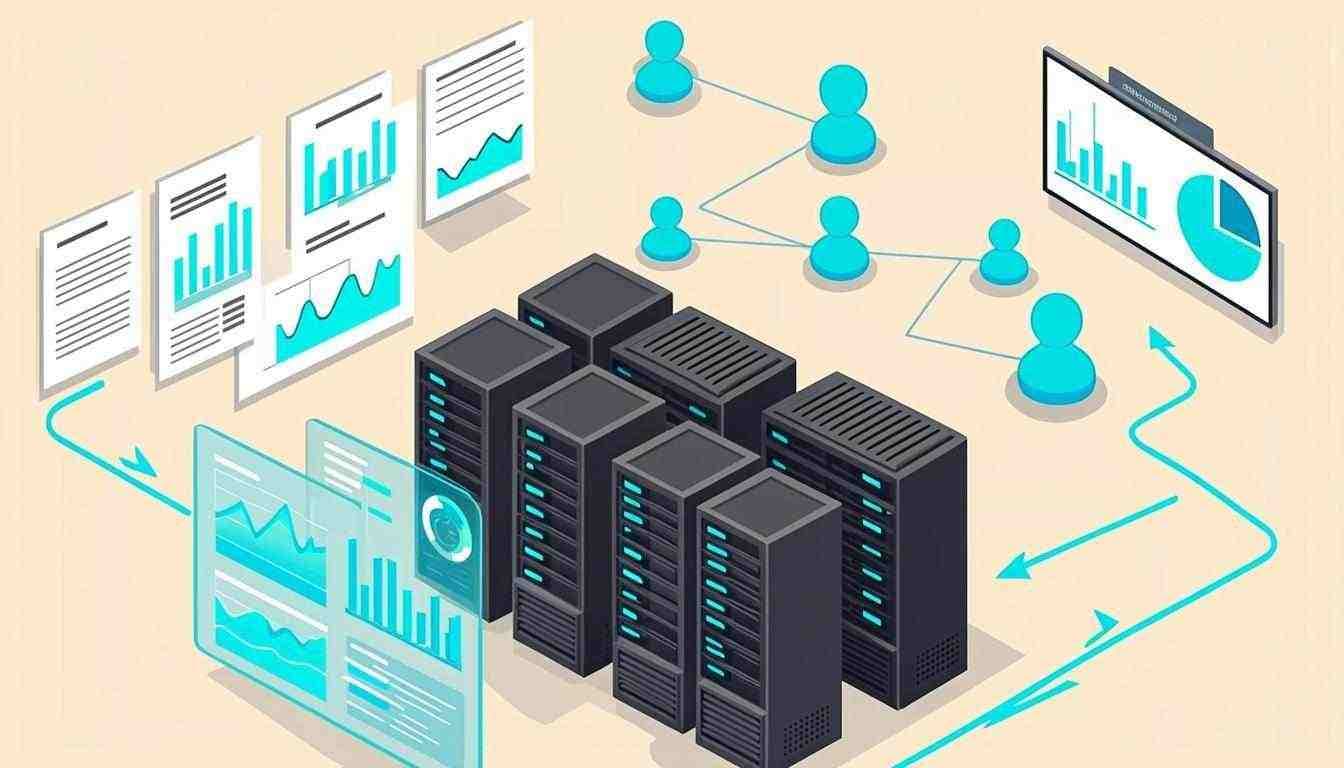
When CRM, projects, and finance share one platform, financial planning transforms from a quarterly guessing game into an always-current picture. The reason is simple: the data is already connected. You don’t assemble it—you look at it. The five questions every SMB owner needs to answer every week become answerable in seconds instead of hours:
You can see: what’s in the pipeline (expected revenue), what’s in progress (revenue in transit), what’s been billed (accounts receivable), what’s been spent (actual vs budget), and what’s coming due (bills and payroll). This integrated view makes forecasting straightforward because the data is already connected—no manual assembly required.
The transformation isn’t just about saving time. It’s about when planning happens. Quarterly planning with a 90-minute data-assembly tax is reactive—by the time you see the picture, the quarter is already over and the decisions you’d make are mostly historical. Weekly planning with a 10-minute dashboard is proactive—you see the trend while you can still affect it. That’s the difference between managing a business and explaining what happened to it.
Forecasting with disconnected tools is like driving with a rearview mirror: you can see where you’ve been, but the road ahead is a surprise. Forecasting with a unified platform is like driving with a windshield: you can see what’s coming and steer accordingly.
Making Financial Planning a Habit, Not a Project
The key to consistent financial planning is reducing the effort required. When getting a financial overview means exporting from 4 tools and building a spreadsheet, it happens quarterly at best. When it’s a dashboard that’s always current, it becomes part of weekly decision-making. Recentriq’s integrated dashboard provides a real-time financial overview without any manual data assembly—turning financial planning from a dreaded quarterly project into a Monday morning habit.
The cadence that works for most SMBs isn’t complicated. It’s three nested loops, each with a different question and a different time horizon:
Can we make payroll? Who owes us money? What bills are due? A 10-minute check of the dashboard.
Target: 10 minDid we hit revenue targets? Where did expenses come in over budget? What changed month-over-month?
Target: 30 minWhat does the next 90 days look like based on pipeline, WIP, and historical trends? Adjust strategy accordingly.
Target: 60 minIf gathering the data for any of these reviews takes more than 30 minutes, your tools are the bottleneck—not your discipline. A unified platform brings all three reviews under 30 minutes combined, which is what makes them actually happen.
The four metrics that actually matter
Forget the dozens of metrics your accounting software tries to surface. For SMB financial planning, four numbers carry 90% of the signal. Track these weekly and you’ll catch most problems before they become emergencies:
The simplest and most important number. If you don’t know this on any given day, you’re flying blind.
Receivables grouped by 0–30, 31–60, 61–90, 90+ days. The 90+ bucket is the one that quietly becomes write-offs.
Weighted deal value in your CRM. The leading indicator for revenue 30–90 days out.
Revenue per project minus actual labor and expenses. Reveals which clients are subsidizing which.
When these four numbers live in one dashboard—connected to the underlying transactions they summarize—the weekly review becomes a glance, not a project. That’s what makes it actually happen. And when the weekly review happens, the monthly and quarterly reviews get easier too, because you’re never starting from a cold picture.
Frequently Asked Questions
Weekly cash flow review, monthly P&L review, quarterly forecasting. If gathering the data for these reviews takes more than 30 minutes, your tools are the bottleneck—not your discipline. The right cadence isn’t a function of ambition; it’s a function of how fast you can see the numbers.
Excel is a powerful tool, but it requires manual data entry from multiple source systems. The manual process is what makes financial planning infrequent and error-prone—you’re always one stale export away from decisions made on bad data. Excel is the right tool for analysis. It’s the wrong tool for aggregation, which is the actual bottleneck.
Cash balance (can I make payroll?), accounts receivable aging (who owes me money and for how long?), pipeline value (what’s coming in?), and project profitability (which work is worth doing?). Track these four weekly and you’ll catch 90% of problems before they become emergencies. A unified platform like Recentriq surfaces all four on one dashboard for $5/user/month—meaning a 5-person team pays $25/month for the financial visibility most founders spend hours assembling manually.
Stop juggling five tools.
Run your whole business on one.
Recentriq brings CRM, projects, documents, accounting, and trading operations into a single context-linked workspace — so every team, every deal, and every dollar lives in one place. No more tab-switching. No more silos. No more guessing what your numbers actually mean.
The Best Invoicing Software 2026 & Small Business ERP
Cash flow is the lifeblood of any company. This is why finding the best invoicing software 2026 is critical. However, standalone invoicing software for small business often creates blind spots. When your invoicing isn't connected to your operational delivery, things slip through the cracks.
From Simple Invoicing to a Cloud ERP for Small Business
The natural evolution from basic best invoicing software for small business is an ERP. But traditional ERPs are famously rigid. A true cloud ERP for small business must provide the robust financial guardrails of an enterprise system without the agonizing implementation. When evaluating ERP software for small business, flexibility is paramount.
The Modern Odoo & Zoho Alternative
If you are seeking an odoo alternative or a Zoho alternative, Recentriq is built precisely for you. It bridges the gap between high-end enterprise resource planning and beautifully simple business management platform small business interfaces. You get the power of an ERP with the agility of a modern app.